
TL;DR: The contactless payment revolution is accelerating globally, with transaction values projected to reach $18.1 trillion by 2030. For businesses operating across borders, emerging technologies, including biometric authentication, wearable payments, IoT-enabled devices, and real-time cross-border rails, are eliminating friction while reducing costs. Understanding these trends is essential for staying competitive in an increasingly cashless global economy.
Your finance team just flagged $847 in unexpected fees on last month’s international transfers.
Your sales manager in Singapore reports customers abandoning checkouts because you don’t accept their preferred mobile wallet. Your European distributor wants to know why settlement still takes 3-5 business days.
As of 2025, now entering 2026, payment expectations have fundamentally shifted.
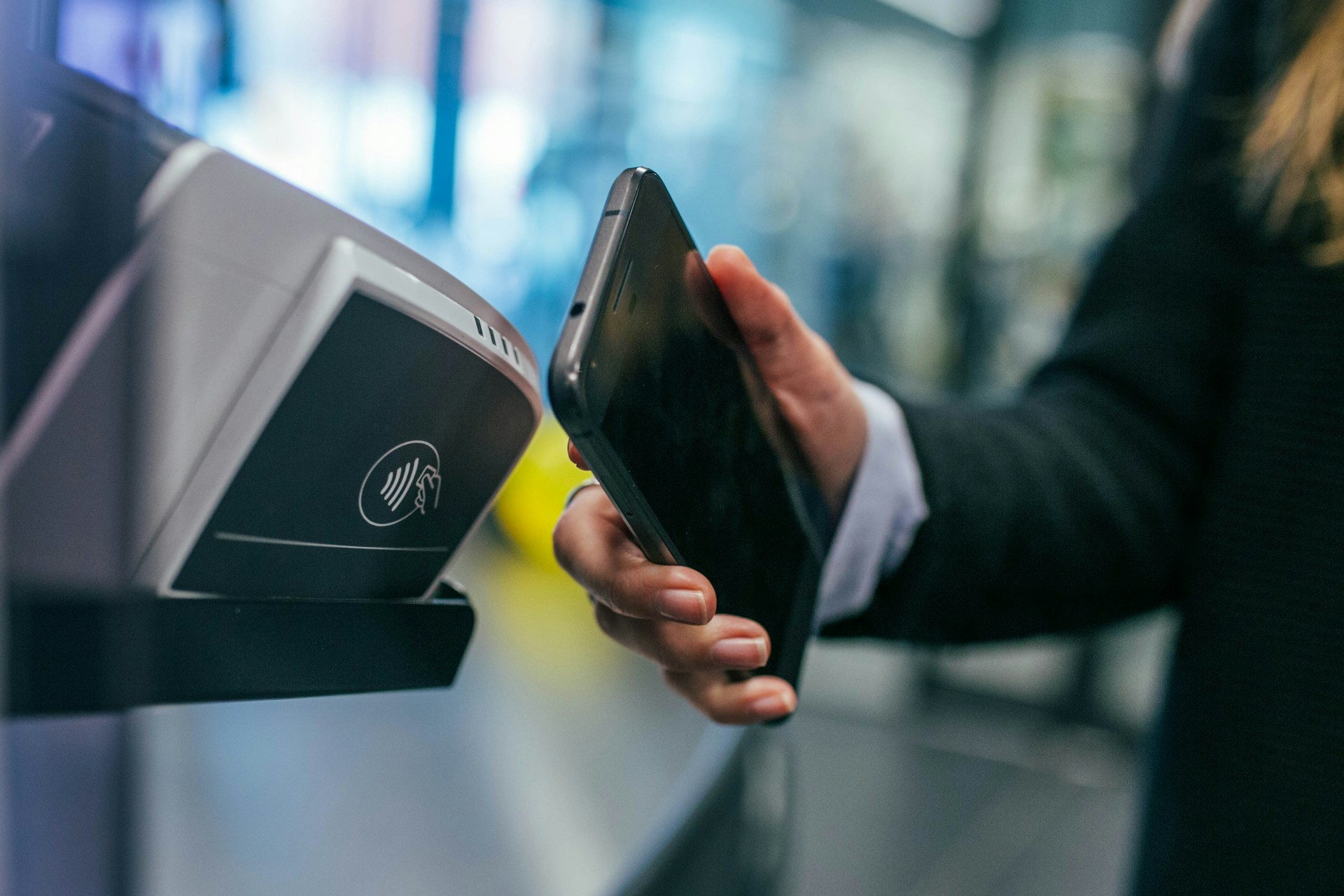
According to recent industry data, tap payments now account for over 70% of all card transactions globally, with consumers expecting the same speed for cross-border payments.
For businesses handling international transactions, the contactless payment revolution represents both challenge and opportunity. Companies that adapt will reduce costs and capture market share. Those that don’t risk obsolescence.
Here’s what you need to know to get it right and make the most of Tap and Go.
How Contactless and Mobile Payments are Taking Over
Juniper Research forecasts that contactless payment transaction values will grow by 106%, from $7.7 trillion in 2025 to $18.1 trillion by 2030. This isn’t gradual evolution—it’s wholesale disruption of how money moves globally and how consumers are operating in the real world.
Digital wallet adoption is driving much of this growth.
Over 5.3 billion people now use mobile wallets like Apple Pay, Google Pay, or regional alternatives, with digital wallet transactions accounting for 38% of all in-store sales in 2025, up from just 29% in 2023.
Europe has reached near-universal adoption with 97% of point-of-sale terminals supporting contactless technology, while Asia-Pacific leads in usage, with contactless payments representing 56% of all transactions.
For businesses operating internationally, this shift matters beyond consumer-facing transactions.
The same technologies enabling tap-and-go retail payments are transforming B2B payments, cross-border settlements, and supply chain finance. Cross-border payment volumes alone are projected to reach $320 trillion by 2032, up from $194.6 trillion in 2024.
Beyond Cards: The Wearables Revolution

Not all contactless comes from cards; it’s driven by the influx of available technology.
Wearable payment devices now account for 12% of contactless transactions worldwide, driven by smartwatches and smart rings.
For frequent business travellers and international teams, the benefits are clear: no wallet fumbling, no currency confusion, and immediate expense tracking.
Smart rings with NFC capabilities support tap-to-pay while providing biometric access control. Some integrate gesture controls, while others use body temperature or heart rate variability as authentication factors.
These multimodal approaches enhance security while maintaining a seamless user experience.
For businesses, this creates new requirements.
If your payment infrastructure can’t process contactless transactions from wearables, you’re excluding high-value customers. If you’re still requiring manual card entry for online B2B transactions, you’re introducing friction that competitors have eliminated.
Biometric Authentication: Security Meets Convenience
Security concerns have long been the primary objection to contactless payments.
How can tapping a device possibly be more secure than entering a PIN or signing a receipt? The answer lies in biometric authentication, which has become the cornerstone of modern contactless security.
Current statistics show that 83% of consumers worldwide now perceive biometric payments as safer than traditional PINs or passwords, with the global biometric payment market reaching $46.38 billion in 2025.
Over 2 billion biometric payment transactions are projected to occur globally this year alone.
The technology has evolved far beyond simple fingerprint scanning. Modern biometric systems employ multimodal authentication, combining fingerprint recognition with facial scanning, voice analysis, or even iris authentication.
Alipay recently added iris authentication to smartglasses-embedded payment solutions, comparing over 260 biometric feature points to verify user identity while using advanced liveness detection to prevent fraud attempts using photos, videos, or 3D masks.
Perhaps more significantly for cross-border business operations, biometric authentication is solving long-standing challenges in remote verification and compliance.
Know Your Customer (KYC) processes that once required in-person verification can now be completed remotely using facial recognition combined with document verification. This acceleration of onboarding is particularly valuable for businesses expanding into new international markets.
Tokenisation technology working alongside biometrics has reduced fraud rates by 34% for NFC payments, while blockchain-based contactless payment solutions are emerging with zero chargeback risk for merchants. For businesses tired of eating the cost of fraudulent transactions or spending excessive resources on fraud prevention, these technologies offer tangible ROI beyond mere convenience.
The Internet of Payments: When Everything Becomes a Payment Device

By 2025, an estimated 21 billion smart IoT devices will be connected globally—up from around 10 billion in 2018. Increasingly, these devices have payment capabilities built directly into their functionality.
Smart refrigerators detect low supplies and automatically order replacements. Connected cars handle tolls seamlessly. Industrial IoT devices in manufacturing facilities order supplies when inventory hits reorder thresholds. This machine-to-machine payment capability fundamentally shifts commercial transactions.
For businesses, IoT payments offer operational efficiency that manual processes cannot match. Instead of purchase orders triggering manual approvals that delay shipments, IoT-enabled systems automatically initiate payments when goods are verified. Settlement happens in real-time, suppliers receive funds immediately, and accounts payable teams focus on exceptions rather than routine processing.
The challenge: IoT payments require modern APIs, real-time settlement capabilities, and integrated systems. Legacy batch-processing infrastructure cannot support the required volume and speed.
Cross-Border Payment Transformation
For businesses operating internationally, perhaps the most significant development is the rapid evolution of cross-border payment rails. Traditional correspondent banking networks that take 3-5 days and charge significant fees are being displaced by real-time payment systems and innovative network linkages.
India’s UPI system has connected with Singapore’s PayNow and France’s Lyra, enabling free, instant cross-border payments with just a smartphone and an internet connection. Mastercard and Corpay recently expanded near real-time payment capabilities to 22 new markets across Asia, Europe, the Middle East, Africa, and Latin America.
China’s Cross-Border Interbank Payment System (CIPS) now connects financial institutions in 119 countries, offering an alternative to SWIFT for yuan-denominated transactions.
This matters because speed drives business outcomes.
Research shows that 65% of people rank speed as their top priority when choosing a payment method for cross-border transactions, while 44% cite poor exchange rates and 35% point to high or hidden fees as major frustrations.
Companies offering near-real-time settlement with transparent pricing capture market share from slower, more expensive alternatives.
The business case extends beyond customer satisfaction.
Real-time payment systems are expected to generate an additional $173 billion in economic output by 2026 through improved cash flow management, reduced working capital requirements, and eliminated reconciliation costs. For businesses managing international supply chains, the difference between 5-day settlement and same-day settlement can be the difference between profitable operations and cash flow crises.
Central Bank Digital Currencies: Government-Backed Digital Money
While private innovation drives contactless payments, central banks are entering the market with their own digital currencies. Currently, 137 countries representing 98% of global GDP are exploring CBDCs, with 49 active pilot projects and three countries—The Bahamas, Jamaica, and Nigeria—having fully launched.
For businesses, CBDCs represent potential game-changers in cross-border payments. Unlike volatile cryptocurrencies, CBDCs are central bank-backed digital versions of fiat currency. This stability, combined with blockchain-style settlement speed, could eliminate many cross-border frictions.
The business implication: monitor CBDC development in your key markets. Early adopters of CBDC-compatible payment infrastructure may gain significant advantages in speed, cost, and regulatory compliance as these systems launch.
Security Imperatives in a Contactless World

The convenience of contactless payments demands heightened security.
Recent surveys show 88% of businesses reported payment fraud in 2022-2023, with global cybercrime costs at $10.5 trillion annually. The threat is accelerating—generative AI-enabled fraud could cause $40 billion in US losses by 2027.
The good news: properly secured contactless systems are significantly more secure than traditional methods. Tokenisation ensures card numbers are never transmitted, multi-factor biometric authentication prevents unauthorised access, and real-time AI monitoring flags suspicious patterns instantly.
The challenge is implementation—your payment stack must include these protections through modern infrastructure and specialised expertise.
Strategic Implications for International Businesses
The contactless payment revolution creates several imperatives for businesses operating across borders:
- Modernise payment acceptance. If you’re relying solely on traditional card processing, you’re excluding customers who prefer mobile wallets, wearables, or region-specific payment methods. 92% of businesses anticipate significant real-time payment investments over the next 24-36 months.
- Optimise cross-border operations. The gap between traditional correspondent banking and modern real-time rails represents substantial cost savings. Companies using SWIFT for routine supplier payments are paying premium fees for legacy infrastructure.
- Build API-first systems. IoT payments, embedded finance, and automated reconciliation all require modern APIs that legacy batch-processing systems cannot support.
- Prioritise security. As payment methods evolve, so do fraud techniques. AI-powered detection, biometric authentication, and comprehensive monitoring protect your business and customers.
- Monitor CBDC developments. Central bank digital currencies could fundamentally reshape cross-border settlement in your key markets.
How Capitalixe Helps Navigate This Transformation
Capitalixe specialises in connecting businesses to cutting-edge payment and banking solutions across 140+ countries, with deep expertise in emerging payment technologies and high-risk verticals.
Our team understands how contactless payments, mobile wallets, and real-time cross-border rails affect your operations—and more importantly, how to leverage these innovations for competitive advantage.
Whether you need to accept diverse payment methods from international customers, optimise cross-border supplier payments, or build infrastructure supporting IoT commerce, Capitalixe’s global network of regulated partners provides solutions tailored to your specific requirements.
Our complimentary advisory services help you navigate complex technology decisions, ensuring your payment stack supports both current operations and future innovation. We cut through the hype to deliver practical guidance on which emerging payment technologies offer genuine ROI for your business model.
Ready to modernise your global payment operations?
Contact Capitalixe today for a free consultation on how contactless payment innovations can reduce costs and accelerate growth for your international business.